 AutoKorrektur
Your street without cars. Computed on your own device.
AutoKorrektur finds the parked cars in your photo and makes them disappear – the AI runs entirely on the phone. No account, no upload, no tracking. A before/after image ready to share, with one click.
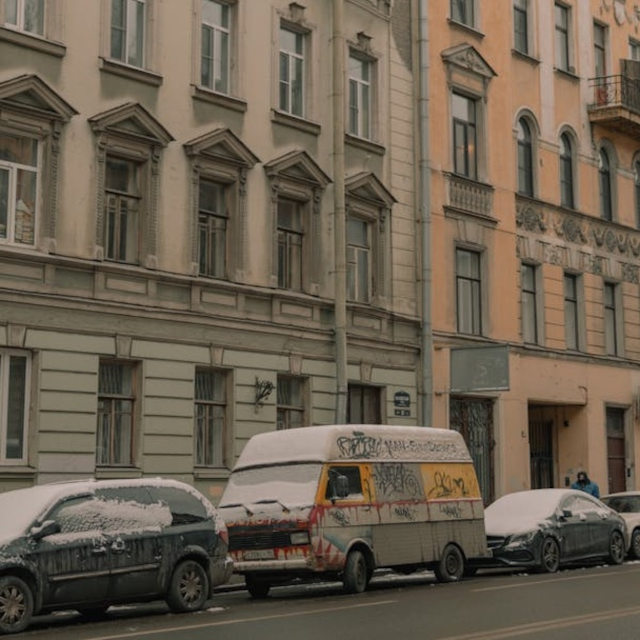
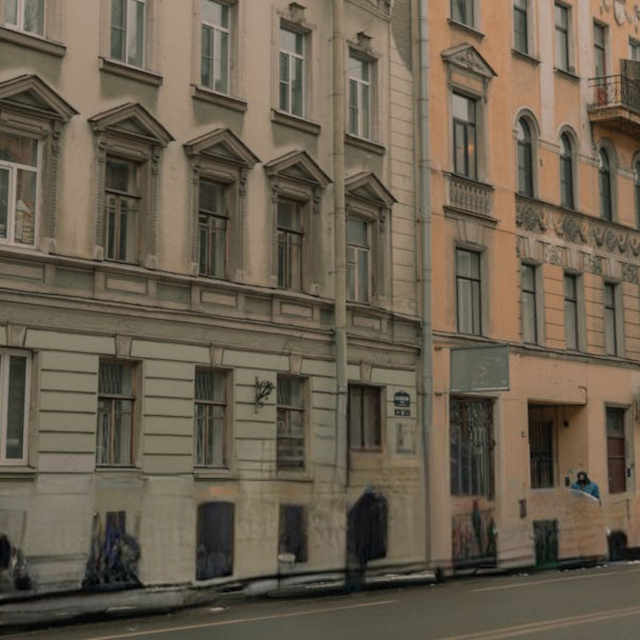
What it is for
You walk through your city, through your neighbourhood, and you see places full of parked vehicles – places that would be nicer and more liveable without the mass of cars. Because that is so hard to picture, we need images of a possible future. This app helps you find the shots worth making: it produces a preview, right on the phone, of how the place could look without the cars. The best ones you share on Instagram or Signal – or hand to a professional, who turns them, with human work and for money, into a high-quality visualisation you can build an information evening around.
What it does
Photo in, cars out
Take a photo or pick one from the gallery. A segmentation network (YOLOv11) finds the vehicles; an inpainting network (MI-GAN) fills the gap with plausible road, greenery and pavement.
Before / after
A slider shows the difference. The finished split card (“BEFORE / CAR-FREE”) goes out through Android's ordinary share sheet – Instagram, Signal, mail, whatever you pick.
For the mobility transition
Made for activists, urban planners and anyone who wants to show how much room a street has once the metal is gone. Free, open source (AGPLv3).
The models ship inside the app, which is why the install file is 133 MB – and why it needs no internet connection after installing. The result is a preview, not a print-quality montage: the AI does not always invent shadows and hidden details plausibly or beautifully.
Hasn't this existed for ages?
Surely this is just the magic eraser! Yes and no – plenty of companies, Apple, Google and Samsung among them, offer a feature that retouches any object out of a picture, but that computing happens wholly or partly in the cloud, and so it costs money that somebody has to carry (if only through advertising – which AutoKorrektur can do without).
My hypothesis, in fact, is that limiting it to cars is not merely a limitation but makes the app more useful: you never have to select the vehicles one by one – you get a car-free vision without having to think about it.
Privacy
Detection and inpainting run on your device's own processor; your photos never leave it. There is no account, no advertising, no analytics service. Whatever you share goes only through the Android share sheet to the app you choose there. Optionally you can switch on anonymous diagnostics in the settings (compute times, device model – never images), recorded on the device and exported only by you; it is off by default. Full privacy policy (the German version is the binding one).
Android: download and install
AutoKorrektur is here as a signed APK you can install directly. Google Play (package de.konradvoelkel.android.autokorrektur) comes later. Android 10 or newer; a device with 4 GB of RAM or more is recommended, older devices take longer (to check what your phone has, look under Settings → About phone).
| File | For | Size |
|---|---|---|
| autokorrektur-2.0.2-arm64-v8a.apk | practically every phone and tablet (64-bit ARM) | 133 MB |
Installing it (“sideloading”): download the file on the phone, tap it in the notification or in your Downloads folder, and allow your browser to install unknown apps when Android asks. Android checks the rest itself.
Version 2.0.2, built 2026-10-31. The file's SHA-256 is in SHA256SUMS. Every release is signed with the same certificate; its SHA-256 fingerprint is 10:0a:d8:62:bb:84:19:45:42:76:5f:4e:30:33:47:e8:4f:fc:14:af:e9:c6:bb:3a:8b:20:1c:bc:97:98:38:9f – check it with apksigner verify --print-certs.
To do it yourself: sha256sum <file> (Linux), shasum -a 256 <file> (macOS) or certutil -hashfile <file> SHA256 (Windows) — the output must match the line in SHA256SUMS. apksigner ships with the Android SDK build-tools (build-tools/<version>/apksigner); without the SDK the checksum on its own already tells you a lot.
Version v2.0.2, as of 2026-10-30. The source code is on GitHub.
To get the app into the Play Store we need a beta-testing programme. If you would like to take part — with your local transport-transition initiative, for example — get in touch with Konrad.
Who is behind this
AutoKorrektur 2.0 is the native Android rewrite of Benjamin Beckers' browser version (1.0) and a private project by Konrad Völkel in Düsseldorf. It builds on two bachelor theses at Heinrich Heine University Düsseldorf (Till Schellscheidt 2024, “Autokorrektur – Automatisierte Objektersetzung in Fotos”; Ben Beckers 2025, “Autokorrektur – Inpainting auf mobilen Endgeräten”). Questions and bug reports: Konrad Völkel, Universitätsstr. 1, 40225 Düsseldorf, kontakt [at] autokorrektur [dot] org — the full Impressum is in German.